Laguna Hills, CA
Apical Surgery & Apicoectomy
in Laguna Hills, CA
Microsurgical access to the root tip — when retreatment cannot resolve the problem.
Request an AppointmentApical Surgery
What is an apicoectomy?
An apicoectomy — also called apical surgery or root-end surgery — is a minor surgical procedure that accesses the root tip of a tooth through a small incision in the gum. The infected root tip is removed, and the end of the root canal is sealed with a biocompatible material to prevent reinfection and allow healing.
Modern microsurgical technique — using the operating microscope, ultrasonic instruments, and MTA — has transformed apicoectomy from a rough procedure into a precise, predictable treatment with published success rates above 92%. For teeth that cannot be treated non-surgically, it is often the best way to save the natural tooth.
Request an Appointment
Why choose microsurgical apicoectomy?
Benefits of apical surgery.
Direct Access
Surgery provides direct access to the root tip when the canal cannot be adequately retreated from above — bypassing posts, calcifications, or restorations that block non-surgical access.
MTA Root-End Fill
Mineral trioxide aggregate (MTA) is placed under microscopic vision to create a biocompatible, hermetic seal at the resected root end — the gold standard material for apical surgery.
Microsurgical Precision
Microsurgical instruments, ultrasonic preparation tips, and operating microscope magnification allow tissue-sparing incisions and precise root-end preparation that older techniques could not achieve.
Definitive Treatment
When retreatment is not possible or has already failed, apical surgery provides a definitive solution that resolves infection and allows the periapical lesion to heal.
The Procedure
Our step-by-step
surgical process.
Each surgical appointment follows the same careful sequence — precise, tissue-sparing, and performed entirely under microscope magnification.
Anesthesia & Preparation
Local anesthesia with a vasoconstrictor is administered for profound numbness and a near-bloodless surgical field. Sedation is available for anxious patients. Pre-operative imaging — including CBCT — is reviewed.
Tissue Reflection
A tissue-sparing microsurgical incision is made and the mucoperiosteal flap is gently reflected to expose the bone overlying the root tip, preserving blood supply and minimizing post-operative swelling.
Bone Window & Root Resection
A small window is made in the bone to access the root apex. The root tip is resected at a 90-degree angle — removing infected tissue, the apical 3 mm of root, and any associated lesion — under operating microscope magnification.
Root-End Preparation & MTA Fill
An ultrasonic tip prepares a retrocavity in the resected root end. The cavity is dried and filled with MTA under high magnification, creating a sealed, biocompatible apical barrier that promotes healing.
Closure & Follow-Up
The flap is repositioned and sutured with microsurgical technique. Sutures are typically removed within one week. A follow-up radiograph at 6–12 months confirms periapical healing.
Technology
Microsurgical technology
that changes outcomes.
- Operating Microscope (4×–25×) Transforms apicoectomy from approximate surgery into precise microsurgery — every incision, resection, and fill is performed under direct, high-magnification vision.
- Cone-Beam CT Pre-operative Planning 3D imaging maps root anatomy, lesion size, proximity to nerves and sinuses, and cortical plate thickness before a single incision is made.
- Ultrasonic Retrotip Preparation Ultrasonic instruments prepare a precise retrocavity in the resected root end — aligned with the canal axis regardless of bone access angle.
- MTA Root-End Fill Mineral trioxide aggregate provides a biocompatible, moisture-tolerant seal that promotes cementum and bone regeneration — the current evidence-based standard.
Indications
When apical surgery is indicated.
Persistent infection after root canal
A tooth with an existing root canal that has a persistent periapical lesion — visible on X-ray or CBCT — that has not resolved despite adequate non-surgical treatment.
Non-negotiable calcification
Complete calcification of the root canal system that prevents non-surgical access to the apex, making retreatment impossible but surgery feasible from the outside.
Separated instrument at the apex
A fractured file lodged near the root tip that cannot be removed non-surgically but is contributing to persistent disease or preventing adequate canal sealing.
Post or restoration blocks retreatment
A large post, cast restoration, or complex prosthetic crown that cannot be safely removed for retreatment — making the surgical approach the least destructive option.
South OC Microsurgical Specialist
Why choose us for apical surgery in Laguna Hills?
- Microsurgical technique. We use tissue-sparing incision design, microsurgical instruments, and operating microscope magnification throughout — not just for the difficult parts. This reduces swelling, speeds healing, and improves outcomes.
- MTA material standard. Every root-end fill uses MTA — the current evidence-based material standard — placed under high magnification for a complete, void-free seal.
- CBCT surgical planning. We review 3D cone-beam CT imaging before every surgical case to map anatomy and avoid complications — not just for cases that look complex on a 2D film.
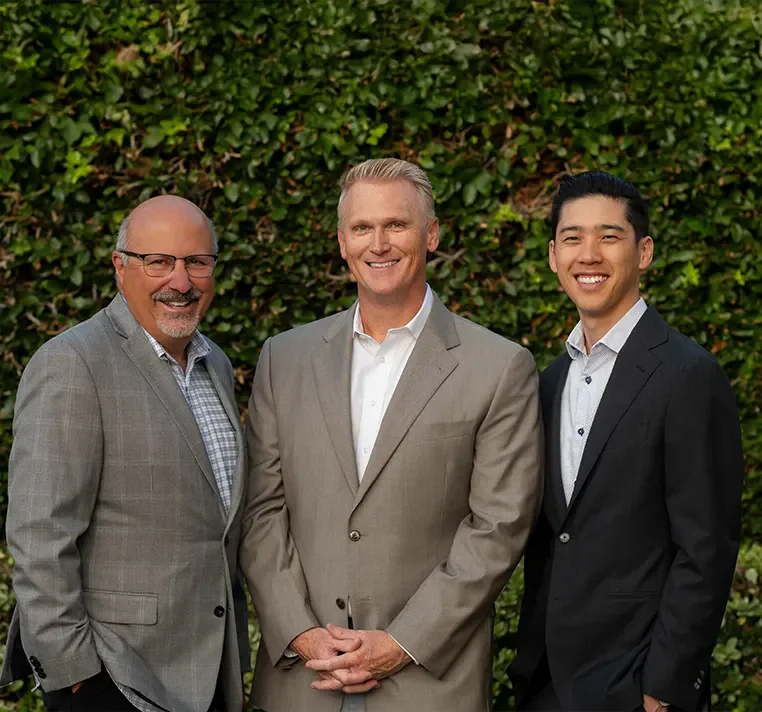
- Expert surgical team. Apical surgery is a core endodontic specialty procedure. Our training and case volume mean fewer surprises and better outcomes for patients referred for surgery.
Frequently Asked Questions
Apical surgery FAQ.
Is apicoectomy the same as retreatment?
No. Retreatment approaches the root canal from the crown downward, removing old fill and reinstrumenting the canals. Apical surgery accesses the root tip directly through the gum and bone, resecting the apex and sealing it from below. Surgery is indicated when retreatment is not possible or has already been attempted.
What is the success rate for apical surgery?
Modern microsurgical apicoectomy using MTA has published success rates above 92% — significantly higher than older surgical techniques. Key factors include microsurgical incision design, ultrasonic root-end preparation, and MTA fill, all of which we use routinely.
What is recovery like after apical surgery?
Most patients experience swelling and mild-to-moderate discomfort for 2–5 days, managed with ibuprofen and ice. Sutures are removed at one week. Most patients return to normal activity within 24–48 hours. We provide detailed post-operative instructions and are available by phone throughout recovery.
Is the procedure painful?
The procedure is performed under local anesthesia — the area is profoundly numb before any surgery begins. Most patients feel pressure and movement but no pain. Sedation is available for anxious patients. Post-operative discomfort is typically managed with over-the-counter analgesics.
Schedule Today
Request your apical surgery consultation in Laguna Hills, CA.
- Phone(949) 581-8890
- Address25261 Paseo De Valencia, Suite 3
Laguna Hills, CA 92637 - HoursMon–Thu 8 am–5 pm · Fri 8 am–2 pm
Persistent infection doesn't have to mean extraction.
Call (949) 581-8890 or request a consultation online. Microsurgical apicoectomy may save your tooth.